
Heating & comfort
Can Air Conditioning Heat Your Home More Efficiently Than Electric Heaters?
Understand how air-to-air heat pumps compare with plug-in heaters, what efficiency figures really mean, and when a room-by-room system makes sense.
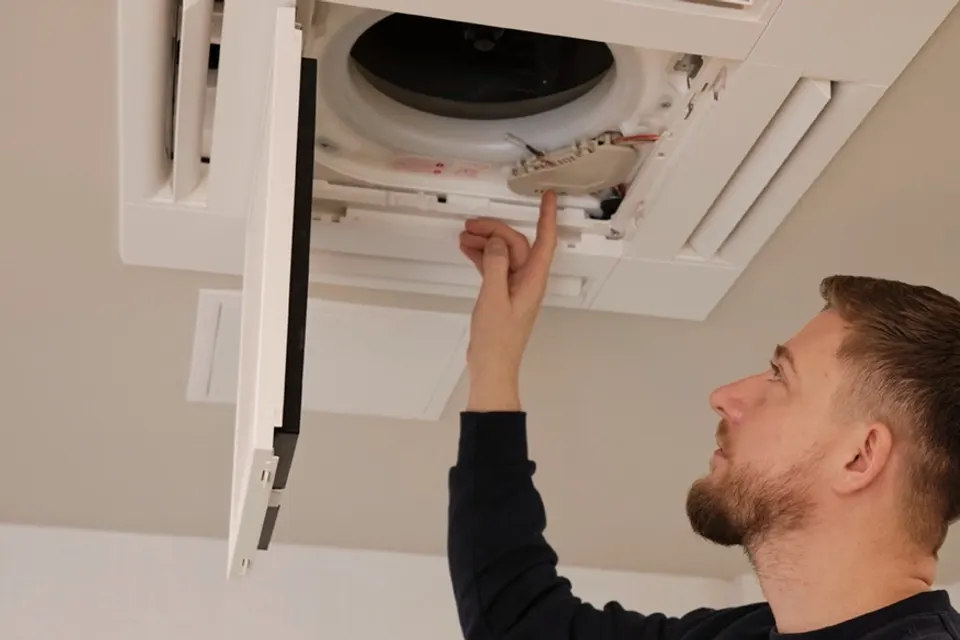
If you regularly warm a home office or living room with a plug-in heater, you may wonder whether air conditioning could do the same job using less electricity. The answer is often yes, provided the system is a reversible air-to-air heat pump, properly selected for heating as well as cooling.
That does not mean every home should replace every heater. Installation cost, room layout, outdoor space and how often you need warmth all matter. Here is how to compare the options without confusing a unit’s advertised heating output with its electricity consumption.
Why air conditioning can provide heating
A direct electric heater converts electrical energy into warmth inside the room. For a simple point-of-use comparison, one kilowatt-hour of electricity gives approximately one kilowatt-hour of heat. An oil-filled radiator may release that warmth differently from a fan heater, but it does not create several units of heat from one unit of electricity.
A reversible air conditioner works differently. In heating mode, it uses electricity to move heat from the outdoor air into your rooms. Energy Saving Trust’s air-to-air heat pump guidance explains this distinction and stresses that a system intended for heating must be designed and sized accordingly.
Understanding COP and seasonal efficiency
The coefficient of performance, or COP, compares useful heat delivered with electricity used under particular test conditions. A COP of three means three units of heat for each unit of electricity. This is not free energy: the additional heat is transferred from outside. It is also not a promise that the unit will achieve that figure every hour.
Seasonal figures average performance across a defined heating season. They are more informative than a single favourable test result, but your home may differ from the test assumptions. Outdoor temperature, defrosting, thermostat settings, installation quality and how hard the unit works can all affect real performance. Ask for the selected model’s heating capacity at relevant winter temperatures.
A fair running-cost comparison
Compare the same amount of useful heat, not simply two appliances with similar numbers on their labels. Suppose a room needs 12 kWh of heat over a day. A direct electric heater would use approximately 12 kWh of electricity. A heat pump achieving an average COP of three over that period would use approximately 4 kWh.
At an illustrative electricity price of 30p per kWh, those energy costs would be £3.60 and £1.20 respectively. This is an arithmetic example, not a current tariff, quotation or guaranteed saving. It excludes installation, maintenance and standing charges. Use your own unit rate and a realistic performance estimate before making a decision.
Which rooms could benefit?
Regularly occupied rooms can be worth assessing, particularly where direct electric heating is used for long periods. A home office used throughout the working week is a different proposition from a guest bedroom warmed occasionally. A low-cost portable heater may remain practical for brief, infrequent use even when its cost per unit of heat is higher.
Room size alone is not enough to select a system. Insulation, glazing, draughts, ceiling height and heat loss should inform the design. Open doors can change the area being heated, while a single indoor unit will not necessarily warm distant rooms evenly. Our air conditioning installation service starts with assessing the property rather than assuming one unit suits every layout.
The practical limits to understand
Most split air-to-air systems need a suitable outdoor position and refrigerant pipework between indoor and outdoor units. Airflow, access for servicing, operating noise and any relevant planning or lease restrictions need consideration before installation. Indoors, the location should allow warm air to circulate without blowing uncomfortably onto the usual seating position.
These systems generally heat room air, not water for your taps or existing radiators. They are different from air-to-water heat pumps. Air conditioning also recirculates indoor air; it is not a replacement for ventilation. Do not assume a grant mentioned for another heat-pump technology applies to a proposed air-conditioning installation.
Getting comfortable, efficient operation
Use heating mode and a sensible temperature setting, allowing the system to modulate rather than repeatedly switching it on at maximum demand. Keep airflow clear and follow the manufacturer’s instructions for filter cleaning. Regular servicing helps identify faults and maintain performance; unusually weak heating should be investigated rather than compensated for with an ever-higher thermostat setting.
Avoid treating summer cooling as cost-free because the equipment can also heat. Cooling adds electricity use, so shading and appropriate ventilation remain useful measures. Evaluate the full year’s comfort needs and likely energy consumption, not just the most attractive winter comparison.
What to ask before choosing a system
Request a room-by-room assessment, expected heating performance, proposed unit positions and a clear explanation of installation and ongoing costs. For homes in St Albans, property layout and any restrictions should be assessed individually rather than inferred from the postcode.
Aircon Elite’s air-to-air heat pump installations form part of its air conditioning range. Discuss whether you need one regularly used room heated or a wider solution. A suitable design should explain both what the system can do and what you will still need for other rooms, ventilation and hot water.