
Planning & installation
Air Conditioning for Winter Heating: Is It Worth It in Hertfordshire?
Assess air-to-air winter heating for a Hertfordshire home. Consider heat loss, room coverage, outdoor space, hot water and realistic costs before installation.
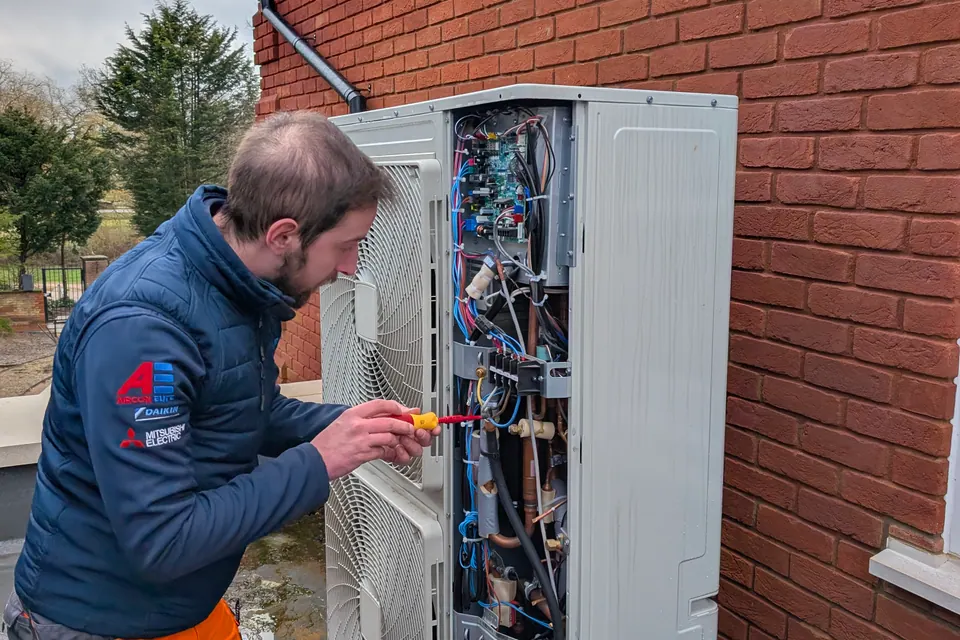
Air conditioning can be worth assessing for winter heating in a Hertfordshire home, particularly where you want targeted warmth and summer cooling from the same equipment. However, the county name does not establish whether a particular house or room is suitable.
The useful questions concern heat loss, room layout, usage and installation constraints. A modern flat, an older terrace and a detached home may need different approaches. Compare the practical benefits with the costs and heating arrangements you will retain.
Start with the actual winter problem
Describe which rooms are difficult to heat and when. A home office used every weekday is different from a spare room warmed occasionally. Explain whether you want supplementary comfort or intend the proposed equipment to become a main source of room heating.
Identify what is unsatisfactory about the current arrangement: uneven temperature, inconvenient controls or reliance on portable heaters. Those are different problems and may not all be solved by adding an indoor unit. Avoid setting a whole-house replacement goal before the property and hot-water requirements have been assessed.
Assess heat loss room by room
Insulation, window performance, ceiling height, draughts and exposed surfaces influence winter demand. Room area alone is not sufficient. Tell the surveyor about planned building improvements so the recommendation reflects the intended condition of the property rather than an assumption.
Energy Saving Trust emphasises choosing air-to-air equipment for its heating task. Ask for the heat-loss assumptions and how they relate to the selected capacity. A useful proposal should explain uncertainty where construction details are unknown instead of presenting a shortcut as a precise calculation.
Check how warmth reaches the rooms
A wall-mounted indoor unit primarily serves the space it is designed for. Heat may move through open doors, but that does not guarantee comfortable bedrooms, bathrooms or distant rooms. Decide which areas need independent control and which existing heating remains available.
For several rooms, consider capacity sharing and control restrictions in a multi-split. The cold-weather performance guide explains output and defrost separately. Low-temperature operating limits should not be mistaken for proof that every connected room receives its nominal heating capacity simultaneously.
Check the outdoor position and building restrictions
The outdoor unit needs suitable airflow, drainage and maintenance access. Consider discharge air, sound and where defrost water goes during cold weather. A visually discreet location is not automatically technically suitable, especially if tightly enclosed or difficult to service.
Confirm relevant planning, lease, listed-building or conservation constraints before proceeding. Homes in St Albans should be checked individually rather than treated as a single building type. The area page describes service coverage, not a separate office or a blanket statement of local permissions.
Compare realistic ongoing costs
Use your tariff and a realistic performance estimate to compare the same useful heat. Include installation, maintenance and additional summer cooling consumption. Do not count a gas standing charge as saved if gas remains connected for cooking, hot water or other rooms.
Typical air-to-air systems do not replace your tap-water heating. Keep that provision explicit in the budget. A comfort-led installation can still be worthwhile without a short payback, but claims of guaranteed winter savings or eligibility for incentives require evidence for the actual installation.
Ask for a recommendation with clear limits
Request exact model references, room coverage, winter design assumptions, controls and maintenance requirements. Ask what happens during defrost or a fault, and whether any supplementary heating is needed. Noise expectations should cover normal heating operation, not only the quietest brochure condition.
Aircon Elite’s air-to-air heating service can assess these questions alongside cooling needs. The right outcome is a practical explanation of suitability and trade-offs for your property, not a recommendation based solely on where you live or a range-wide efficiency headline.