
Heating & comfort
Why Homeowners Choose Year-Round Heating and Cooling
Explore benefits and limits of reversible air conditioning for year-round comfort, including room coverage, summer energy use, hot water and ventilation.
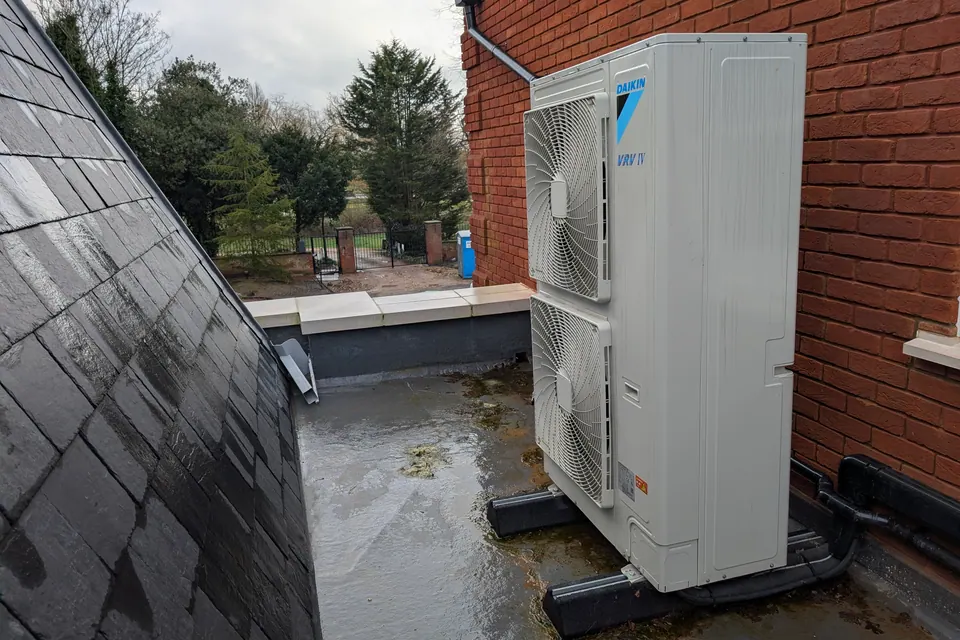
Reversible air conditioning can provide two useful functions from the same equipment: cooling rooms in warm weather and heating them when temperatures fall. For some households, that combination is more relevant than choosing equipment for summer alone.
The appeal is practical, not proof of a universal trend or guaranteed saving. Whether it suits your home depends on room use, building performance, outdoor space and the heating arrangements you will retain. Both modes need assessment rather than assuming success in one guarantees the other.
Understand what reverses
In cooling mode, the system transfers heat from indoors to outdoors. In heating mode, it transfers heat in the other direction. Electricity powers the compressor and fans; it is moving heat rather than acting solely as a direct-resistance heater.
Energy Saving Trust’s air-to-air guidance explains the distinction from air-to-water heat pumps. Standard domestic air-to-air systems warm room air, not existing radiators or tap water. You therefore need a separate plan for hot-water demand and any rooms outside the system’s coverage.
Match benefits to regularly used rooms
A home office occupied during working hours may need winter warmth and summer cooling. A bedroom may have a different pattern, with noise and overnight airflow taking priority. A guest room used occasionally presents another balance between installation cost and likely benefit.
Room-by-room control can avoid conditioning unused spaces, provided the design and controls support that use. However, one indoor unit does not necessarily distribute warmth evenly through a whole property. Closed doors, stairways and distant rooms limit what a single room-based installation can achieve.
Design for heating as well as cooling
Cooling loads and winter heat losses are not identical. Solar gain can dominate a room in summer, while insulation, draughts and outdoor temperature influence winter demand. Ask for evidence that the selected model and arrangement meet the relevant requirements in both modes.
Nominal capacity, seasonal efficiency and low-temperature operating limits answer different questions. Defrost can interrupt heating temporarily, and shared outdoor units have capacity limits. A recommendation should explain these conditions rather than relying on a brochure’s best efficiency number or the fact that heating mode exists.
Budget for the complete year
Efficient heating may reduce purchased electricity compared with direct electric heaters for the same useful heat, but the saving depends on achieved performance. Our electric-heater comparison sets out that calculation without implying every installation pays for itself.
Cooling creates an additional electricity use where none existed before. Include summer operation, servicing and retained heating or hot-water costs in the annual budget. Keep comfort benefits visible too: an installation may be worthwhile for comfort without producing an overall reduction in household energy spending.
Consider everyday living with the equipment
Indoor airflow, operating sound, appearance and controller simplicity all affect satisfaction. Outdoors, equipment needs adequate air movement, drainage and maintenance access. Permission requirements and neighbour considerations should be checked before deciding on a position.
Air conditioning normally recirculates room air and is not a substitute for fresh-air ventilation. Filter features do not change that basic distinction. Explain any household sensitivities during the assessment so unit location and controls can be discussed realistically rather than assuming one standard setting works for everyone.
Plan care for both seasons
Equipment used throughout the year needs a maintenance plan reflecting that workload. Follow the user manual for accessible filter care and keep a record of changes in performance. Arrange professional attention for persistent weak heating or cooling, unusual noise and indoor dripping.
Aircon Elite’s installation service can assess combined requirements. For homes in Hatfield, as elsewhere across the service area, a useful proposal explains which rooms are covered, what remains separate and how to operate the system comfortably through changing seasons.